

Can India’s auto companies escape Marelli’s $4.9bn bankruptcy?
When a global supplier with 16 production sites and three R&D centres in India goes bust, the Indian joint venture is usually assumed to go down with it. Marelli's case suggests that assumption is half wrong.
When a global supplier which has 16 production sites and three R&D centres in India, goes bust, the Indian joint venture is usually assumed to go down with it. Marelli’s case suggests that the assumption is half wrong.
Marelli, a Japan-headquartered parts maker with Italian roots, has spent 17 months in Chapter 11 with about $4.9bn (₹46,285 crore) of funded debt. Its biggest Indian partnership has barely noticed. The 50:50 lighting venture with Samvardhana Motherson raised revenue to ₹2,543 crore ($269m) in FY26, carries almost no net debt and was affirmed at IND AA/Stable by India Ratings in July. Marelli UM Electronic Systems, a smaller instrument-cluster maker near Gurugram, is in a very different position. Its audited accounts carry a going-concern doubt, and its Indian partner has agreed to sell out to a US shell company.
A debt built by deal-making
KKR, an American private-equity firm, created Marelli in 2019 by merging Calsonic Kansei, once a Nissan affiliate, with Magneti Marelli, which it bought from Fiat Chrysler at a value of about $7.1bn (₹67,067 crore). The merger’s logic faded faster than its debt. A court-supervised rehabilitation in Japan followed in 2022, then the Delaware filing in June 2025.
Management blamed strained liquidity, high fixed costs and poor EV contracts. Nikkei pointed to the troubles of Nissan, a key customer. Under the plan, KKR’s equity is wiped out, and lenders including Deutsche Bank, Strategic Value Partners, MBK Partners, Fortress and Polus become the owners.

Motherson’s cushion
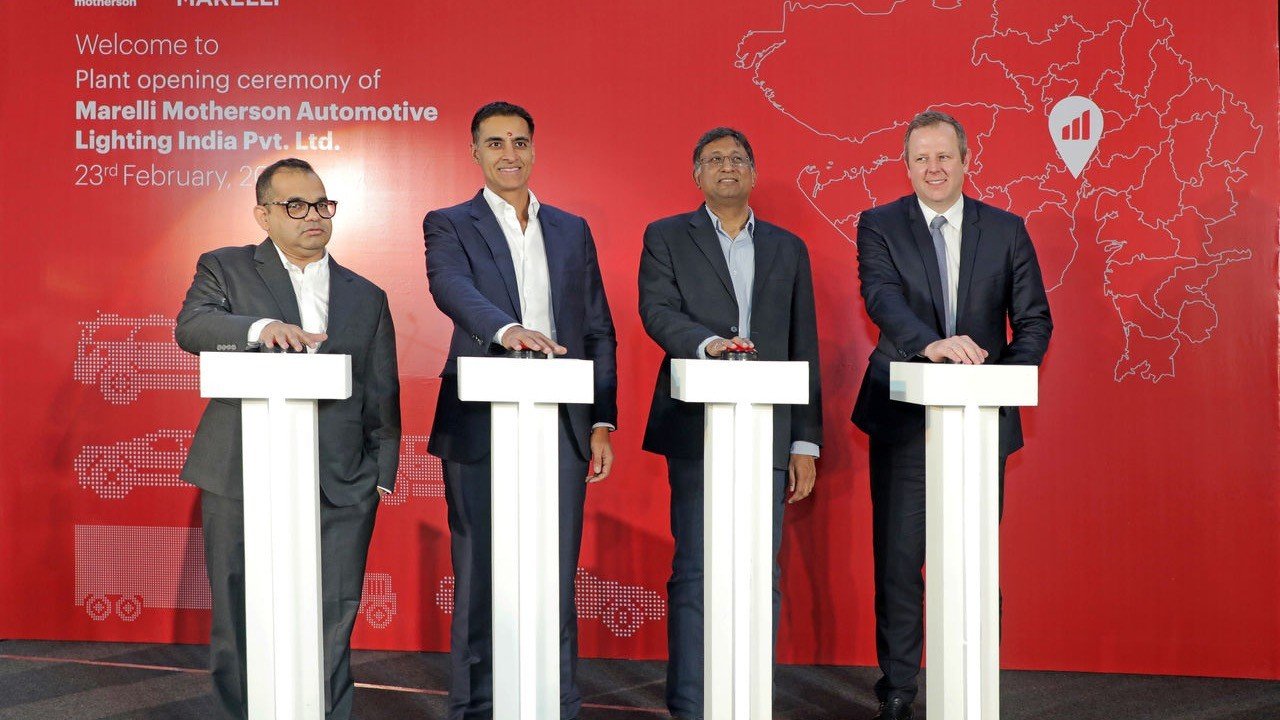
For Motherson, controlled by Vivek Chaand Sehgal’s family, the arithmetic is reassuring. The lighting venture dates from 2008, employs more than 4,500 people and runs eight plants in Pune, Sanand, Bawal and Noida. It made EBITDA of ₹545 crore ($57.7m) in FY26, a 21.4% margin, and covers its interest 53.6 times.
Motherson accounts for the venture by the equity method, and it received ₹203 crore ($21.5m) of FY26 dividends from all its associates and joint ventures combined. It has also trimmed its exposure, selling the assets of a loss-making suspension venture to Gabriel India for ₹60 crore ($6.35m) in April 2025. There is a precedent too: the lighting venture’s rating rose after Marelli’s 2022 rehabilitation.
The unease is about control, not cash. The lamps are Marelli designs, and the joint-venture agreement is not public, so nobody outside knows what rights Motherson gains when lenders take over. Unions say Marelli Europe, which holds the 50%, is being split into separate entities. A standalone lighting unit would be easier to sell.
The weak link in Gurugram
Marelli says it has 16 production sites and three R&D centres in India. Its partnerships differ less in structure than in resilience.
Sources: India Ratings, Samvardhana Motherson results
The buyer in the wings
The next test comes on December 8th, when a Delaware judge considers the plan under Marelli’s new chief executive, Laurent Favre. Stellantis told the court in September that it had no obligation to sign a deal. Bloomberg reported in June that it and Nissan were discussing the purchase of Marelli assets.
Motherson watches with particular interest. Its bid for the whole company collapsed in 2025 amid a split among creditors. It has three realistic courses: buy Marelli’s half of the Indian lighting venture, bid for parts of the global lighting business, or stay put and protect its licences.
The lenders may not oblige. New owners seldom rush to sell a stake in a business earning a 21% margin, least of all to its co-owner. Bankruptcy has so far taught Motherson’s lamp venture little. The harder lesson may be that a joint venture’s safety depends on the quality of its partner, and that Marelli UM’s partner is about to change.
Conversion rates: dollars at ₹94.46, the rupee’s provisional close on November 5, 2026. Euros at ₹106.55, the RBI reference rate for October 30, 2026, the latest verified euro rate.
Related Stories

CBAM Casts a Shadow Over India’s $6.8-Billion Auto Component Exports to Europe, and Over European Carmakers Too
Europe’s carbon levy does not cover cars or car parts, but it taxes the metals they are made...